Spreadsheets: The Silent Margin Killer
We’ve all used spreadsheets. They’re cheap, flexible, and easy to tweak. But when you’re managing a construction business with multiple projects, vendors, and 200+ employees, spreadsheets start falling apart.
Take procurement as an example. Tracking material requests, RFQs, vendor offers, and POs in spreadsheets might work for one or two projects. But what happens when you’re juggling 30 active jobs? Mistakes pile up — duplicate orders, missed deadlines, and approvals lost in email chains. Each mistake chips away at your margins.
A 2020 study by PwC found that manual processes in construction lead to an average of 5-10% margin erosion. For mid-size contractors operating on slim margins (2-7%), that’s the difference between profit and loss.
Why ERP Fixes Procurement Chaos
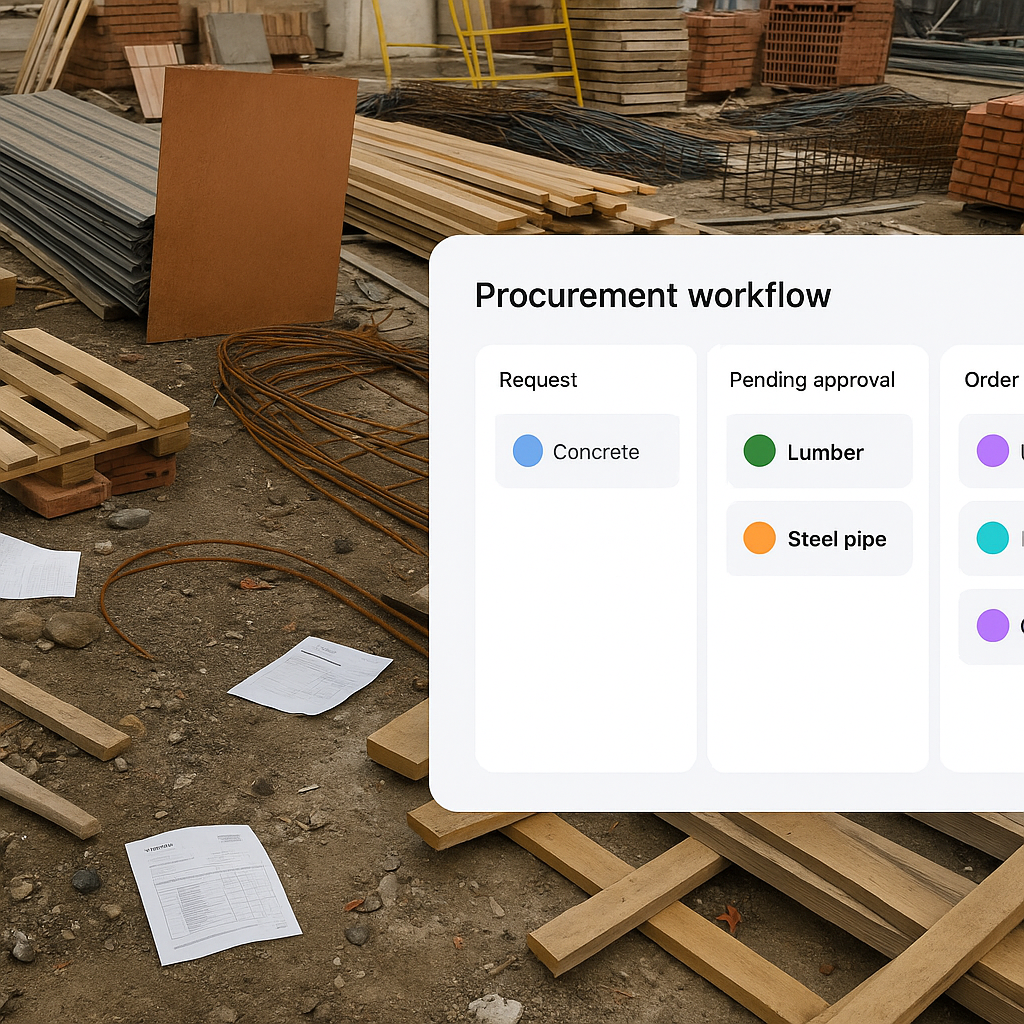
An integrated ERP system, like JobNext, eliminates these headaches. It structures your procurement process into a clear workflow: Material Request → RFQ → Vendor Offers → PO, with built-in approval chains. Every step is tracked in real time, so nothing falls through the cracks.
Think of it as moving from a messy spreadsheet to a single dashboard that shows everything — what’s ordered, what’s delivered, what’s pending. No more hunting for the latest version of a file. No more accidental duplicate orders.
Real-World Example: Saving Time and Money
We recently worked with a mid-size MEP contractor in Oman. Before switching to ERP, their procurement team spent hours every week reconciling spreadsheets with email trails. Errors were common — 12% of their POs had discrepancies, leading to disputes and delays. After implementing JobNext, their PO error rate dropped to under 1% within six months. They reduced procurement cycle times by 40%, saving both time and money.
Spreadsheets Can’t Handle Compliance
If you’re operating in India or the GCC, compliance tracking is another spreadsheet nightmare. GST filings, TDS deductions, PF contributions — keeping this accurate across multiple projects is next to impossible manually.
ERP systems integrate compliance directly into workflows. For instance, JobNext automates GST calculations and generates statutory reports that sync with Tally. It’s not glamorous, but missing compliance deadlines can lead to penalties that wipe out your profits.
The JobNext blog explains this well: disconnected systems multiply risks. Spreadsheets don’t talk to your accounting software. Your accounting software doesn’t talk to your payroll system. It’s a recipe for disaster.
Real-Time Monitoring Saves You Margins
One of the biggest advantages of ERP systems over spreadsheets is real-time visibility. With spreadsheets, you’re always reactive — fixing problems after they’ve already hurt your bottom line. ERP systems let you monitor project profitability in real time.
Take billing, for example. JobNext supports six billing methods, including RA Bills and stage-wise invoicing. This ensures you don’t miss revenue opportunities because someone forgot to raise an invoice on time. Spreadsheets? They won’t even remind you that revenue leakage happened.
Conclusion: Spreadsheets Aren’t Built for Growth
If you’re serious about scaling your construction business, spreadsheets won’t cut it. They’re fine for small operations, but once you’re running multiple projects with hundreds of moving parts, the risks outweigh the benefits. ERP systems like JobNext are built to handle complexity — procurement, billing, compliance, HR, and more — in one unified platform.
Want to understand what it takes to go from spreadsheets to ERP? Check out The Contractor's First ERP: What Nobody Tells You About Going Digital. It’s a brutally honest guide to making your first ERP implementation succeed.
Ready to see JobNext in action?
Multi-tenant SaaS ERP for construction, facilities management, and contracting — covering preconstruction, project execution, procurement, HR & payroll, equipment, finance, and 150+ analytics reports.
Get Started Free →Learn more at SoftNext Solutions