₹25 Lakh Lost to Procurement Chaos Every Year: The ERP Fix You Need
Procurement in construction isn't glamorous, but it's critical. It’s the backbone of every project. Without materials, labor contracts, and equipment, you can't build. Yet, for many contractors, procurement is also a black hole—a source of constant delays, cost overruns, and headaches.
How bad is it? A report from SoftNext Solutions shows that manual procurement mistakes cost small contractors ₹25 lakh or more every year. That’s a huge chunk of margin, especially for businesses already struggling with razor-thin profits.
So, what's going wrong? And more importantly, how do you fix it?
The Procurement Problem No One Talks About
Let’s start with the basics. The procurement process for a typical small-to-mid-size contractor involves multiple steps: material requisitions from site, vendor selection, request for quotations (RFQs), purchase orders (POs), delivery tracking, and invoice matching. Sounds straightforward, right? On paper, sure. In reality, it’s chaos.
Common Procurement Pain Points
Here’s what usually happens:
- Manual errors: A site engineer scribbles a material request (MR) on paper, which gets lost or misinterpreted.
- Approval delays: The MR sits in someone’s email inbox for days because there’s no defined approval workflow.
- Poor vendor tracking: The purchase manager sends RFQs to the wrong vendors or forgets to follow up.
- Duplicate or incorrect orders: With no centralized system, multiple purchase orders overlap, leading to excess stock or incorrect materials arriving on site.
- Missed delivery deadlines: No one has a clear view of whether materials will arrive on time, delaying project schedules.
Let’s put this into perspective with a concrete example. A general contractor in Pune lost ₹5 lakh in one month due to duplicate orders. Materials were overstocked, storage costs skyrocketed, and half of the items expired because they weren’t needed on-site. This isn’t unusual—it’s the reality for many construction firms relying on manual procurement processes.
These inefficiencies don’t just cost money—they erode trust with clients and vendors alike. Worst of all, they’re entirely avoidable.
How Construction ERP Fixes Procurement Chaos
Enter construction ERP software. Unlike generic ERPs, construction-specific systems like JobNext are designed for the unique needs of contractors. They replace a spaghetti mess of emails, spreadsheets, and paper trails with a single, unified platform.
Let’s break down how this works in practice:
1. Structured Procurement Workflows
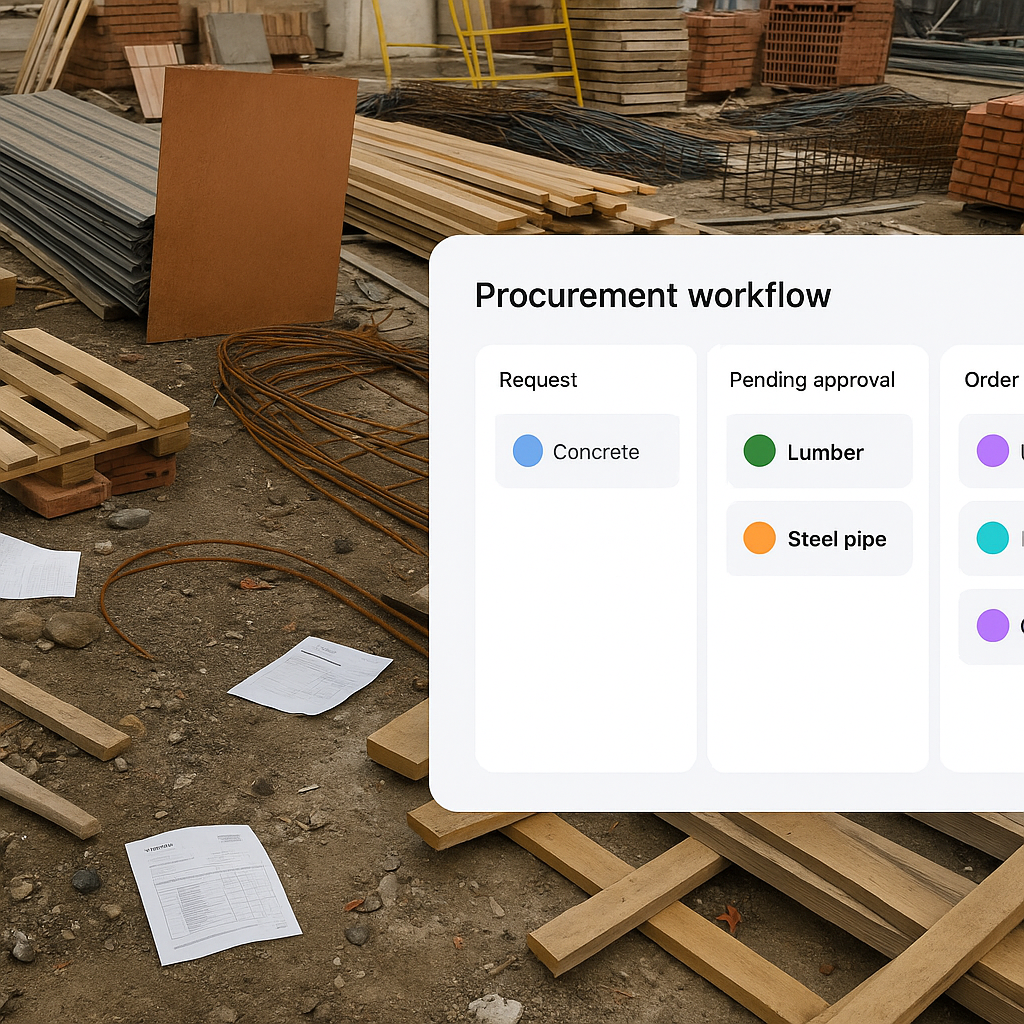
A good construction ERP enforces a step-by-step procurement process. Take JobNext, for example:
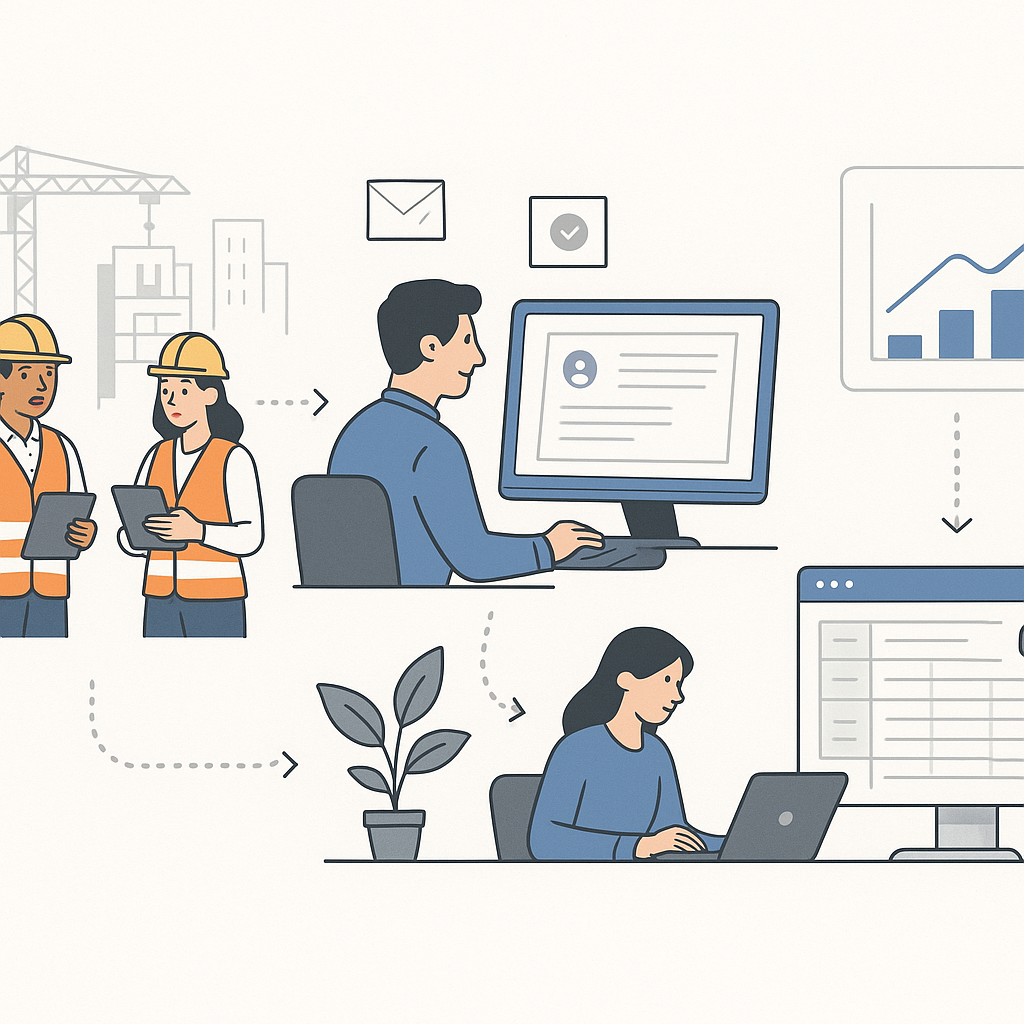
- Site engineers raise material requisitions (MRs) directly in the system: No more scribbled notes or lost emails.
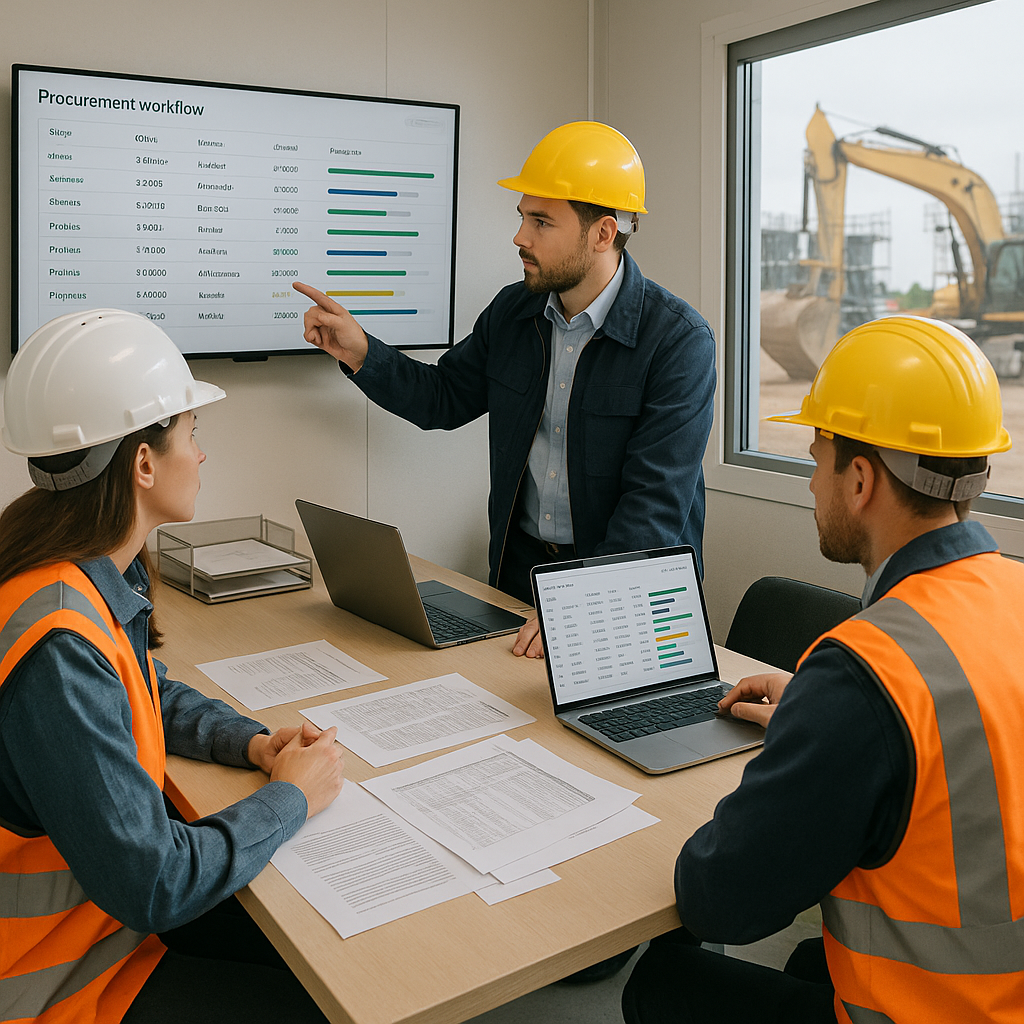
- Automated approval routing: The MR is automatically routed for approval based on pre-configured workflows. Need a manager’s sign-off for high-value items? No problem—JobNext allows amount-based approval thresholds and multi-level routing.
- RFQs sent to pre-qualified vendors: The system generates RFQs and sends them directly to vendors in your directory.
This cuts out manual bottlenecks and ensures no request falls through the cracks. For example, a mid-size contractor in Bangalore reduced approval time by 30% after implementing automated workflows in their ERP.
2. Centralized Vendor Management
Ever scrambled to find a reliable vendor at the last minute? Or overpaid because you didn’t have time to negotiate better rates? With construction ERP, those days are over.
JobNext, for instance, includes a centralized vendor directory. You can:
- Track vendor qualifications: Store compliance documents such as GST registration certificates.
- Monitor procurement history: Know which vendors consistently deliver on time and which don’t.
- Use rate contracts: Pre-negotiated, time-bound agreements allow you to lock in the best pricing and skip the RFQ process for recurring purchases.
This feature alone can save contractors lakhs annually. For example, a contractor in Delhi negotiated a 10% discount on bulk cement purchases by using rate contracts within their ERP.
3. Real-Time Procurement Tracking
One of the biggest challenges in construction is knowing where your materials are—especially when managing multiple sites. With an ERP, you get real-time visibility into:
| Metric | Example Use Case |
|---|---|
| Cycle Times | How long does it take to go from RFQ to PO? |
| Pending Material Requests | Know which MRs are still waiting for approval |
| Vendor Performance | Track delivery times and quality issues |
This level of insight lets you identify bottlenecks and fix them before they derail your project. For instance, a contractor in Hyderabad discovered that one vendor consistently delayed deliveries by 10 days. Using real-time data, they replaced the vendor and avoided a ₹7 lakh penalty.
Real-World Case Study: ₹45 Lakh Saved
Let’s take an example from SoftNext Solutions. A mid-size MEP contractor in Mumbai was losing ₹30 lakh annually due to procurement inefficiencies. Their turning point? Adopting structured MR → RFQ → PO workflows in a construction ERP.
Before the switch, their site engineers often bypassed the procurement team, ordering materials directly from their preferred vendors. The result? Bloated costs, inconsistent quality, and frequent stockouts.
With the ERP in place, every procurement step had to go through the system. MRs required manager approvals, RFQs were automatically issued to pre-vetted vendors, and POs were generated only after compliance checks. Within a year, the company slashed procurement spend by 15%, saving ₹45 lakh.
Why Contractors Can't Afford to Wait
You might think, "This all sounds great, but ERPs are expensive." That’s a fair concern. But the cost of doing nothing is even higher. Remember the ₹25 lakh figure? That’s a conservative estimate for what you’re bleeding annually.
Plus, modern SaaS platforms like JobNext are far more affordable than traditional ERP systems. They’re cloud-based, meaning no upfront hardware costs. And they’re modular—you only pay for the features you need.
Cost Comparison Table
| ERP Type | Features | Costs (approx.) |
|---|---|---|
| Traditional ERP | Full-suite, on-premise | ₹10-15 lakh upfront + ₹5 lakh/year |
| SaaS Construction ERP | Modular, cloud-based | ₹1-3 lakh/year |
| Manual Processes | No software costs, but inefficient | ₹25-30 lakh/year lost to errors |
Final Thoughts
If procurement chaos is costing you lakhs every year, it’s time to act. A construction ERP like JobNext doesn’t just save you money; it gives you control. No more lost MRs, missed deliveries, or vendor disputes. No more guessing where your materials are or how much they’re costing you.
Ready to take back control of your procurement process? Learn more about JobNext →
FAQ
1. How much does a construction ERP cost?
It depends on the vendor and the features you need. SaaS-based ERPs like JobNext are subscription-based, making them more affordable for small and mid-size contractors.
2. Can I implement an ERP while managing ongoing projects?
Yes, modern ERPs are designed for smooth implementation. Platforms like JobNext offer phased rollouts, so you can start small and scale up as needed.
3. What if I already use spreadsheets?
Spreadsheets are fine for small projects, but they don’t scale. An ERP centralizes your data, reduces errors, and provides real-time visibility—a game-changer for growing contractors.
4. How long does it take to see ROI with an ERP?
Most contractors see measurable ROI within 6-12 months. Savings come from reduced errors, faster approvals, and better vendor management.
5. Are construction ERPs customizable?
Yes. Platforms like JobNext allow you to adapt workflows and modules to fit your specific needs, ensuring you only pay for what you use.
Learn more at SoftNext Solutions