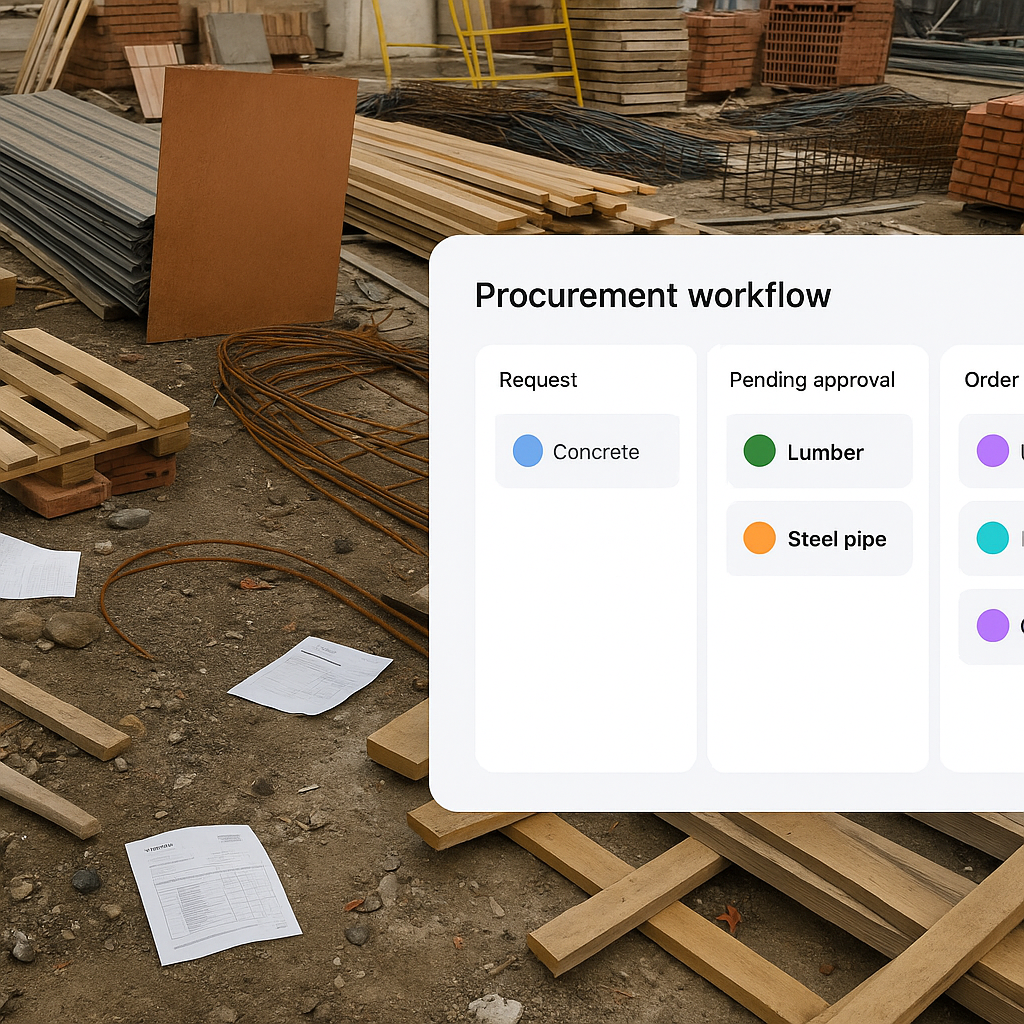
Why Procurement Is Every Contractor's Nightmare
If you've ever run a construction project, you know how ugly procurement can get. A site manager calls you at midnight for urgent material. The vendor sends the wrong grade of steel. That 'urgent' purchase order gets buried in someone's email. Sound familiar?
The chaos doesn't just waste time—it eats into margins. Missed approvals lead to over-ordering. Duplicate purchases show up in audit reports. And those mistakes don’t just hit one project; they snowball across multiple jobs.
The ₹50 Lakh Problem
A typical mid-size contractor loses ₹50 lakh annually due to procurement inefficiencies. How? Let’s break it down:
- Missed approvals: Without structured workflows, site teams bypass budget checks, leading to uncontrolled spending.
- Vendor pricing errors: Unverified rates result in inflated purchase orders.
- Duplicate orders: Manual systems fail to flag overlapping requisitions, creating unnecessary inventory.
- Delayed deliveries: Poor coordination with vendors stalls timelines and increases costs.
A 2023 McKinsey report on construction inefficiencies found that procurement errors contribute to up to 3-5% margin erosion for contractors globally. Let’s put this into perspective: If you're running a ₹10 crore business, procurement chaos could cost you up to ₹50 lakh annually. The math is brutal.
Real-World Example: A ₹35 Lakh Loss
One mid-sized contractor in Pune ran into a nightmare situation during a residential project. Due to poor procurement processes:
- Steel reinforcement bars were over-ordered by 20%, costing ₹18 lakh.
- A vendor delivered incorrect grades of cement, halting work for 10 days and incurring ₹12 lakh in labor and delay penalties.
- Duplicate orders for plumbing fixtures added ₹5 lakh in unnecessary costs.
By the time they conducted an audit, the damage was done. These losses could have been avoided with structured procurement workflows.
Fixing Procurement: Structured Workflows
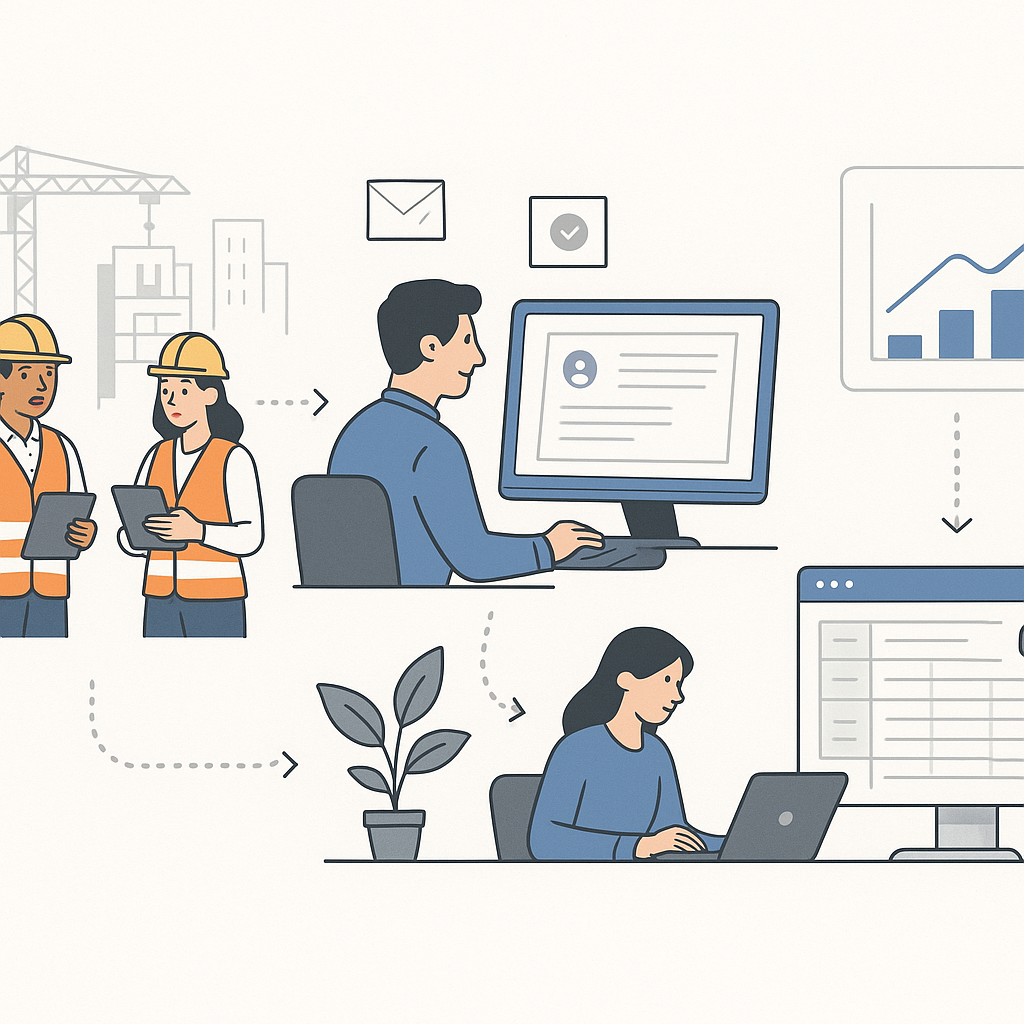
Enter ERP. Specifically, construction ERP platforms like JobNext, which enforce disciplined procurement workflows. Here’s how it works:
Step 1: Material Requisition (MR)
Every site request starts as a formal MR. Verbal orders and WhatsApp messages are replaced with structured requests containing pre-defined fields. This creates transparency and accountability.
Actionable Steps:
- Categorize materials hierarchically (e.g., steel → reinforcement bars → grade 500D).
- Set quantity controls for each category to prevent over-ordering.
- Track procurement history to identify patterns of waste or inefficiencies.
Step 2: Vendor RFQs
Once the MR is approved, the system circulates RFQs (Request for Quotations) to pre-qualified vendors. Rates are validated against pre-negotiated contracts, eliminating rogue pricing surprises.
Case Study: A contractor in Bangalore reduced material costs by 12% after implementing RFQ workflows in their ERP, as vendors competed transparently for orders.
Step 3: Approval Chains
Configurable multi-level approval workflows act as the game-changer. JobNext allows you to set amount-based thresholds for escalation. For example:
- High-value purchase orders (POs) go straight to the MD for sign-off.
- Routine approvals stay with the business unit head.
Actionable Steps:
- Define approval thresholds based on project budgets.
- Use ERP-generated alerts to flag any PO exceeding budget limits.
Step 4: PO Generation
Approved RFQs convert automatically into purchase orders. The ERP tracks every PO against budgets, flagging overspend before it happens. This eliminates manual errors and ensures accountability.
Step 5: Delivery & Validation
When materials arrive, the system matches delivery notes to the original PO. Any discrepancies trigger alerts, ensuring vendors stay accountable.
Concrete Example: A contractor in Hyderabad saved ₹9 lakh in one year by catching delivery errors—such as short shipments and incorrect grades—through automated validation.
Real Results: ₹50 Lakh Saved
A contractor we interviewed switched to structured procurement workflows using JobNext. Within six months:
- Duplicate orders dropped by 80%
- Vendor disputes fell to zero
- Material delivery timelines improved by 25%
That’s ₹50 lakh in savings—not theoretical, but real money recovered. You can read more about similar results in ₹25 Lakh Lost to Procurement Chaos: The ERP Fix Businesses Miss.
Common Objections
"This sounds great, but my team won’t follow the system."
Fair point. Adoption is always the hardest part. But ERP platforms like JobNext simplify workflows so much that teams actually prefer them. No more juggling Excel sheets or chasing approvals via email.
Actionable Steps:
- Start with a pilot project to show results.
- Conduct training sessions to familiarize teams with the system.
- Incentivize adoption by linking bonuses to procurement efficiency metrics.
"We don’t have time to implement this during active projects."
That’s valid too. But most ERP implementations are staged—you can start with procurement while keeping other systems as-is. Over time, as your team gets comfortable, you can expand to billing, HR, and equipment management.
Comparison Table: Staged vs Full ERP Rollout
| Feature | Staged Rollout | Full Rollout |
|---|---|---|
| Implementation Time | 1-3 months (per module) | 6-12 months (entire system) |
| Risk | Low (one module at a time) | High (disrupts all processes) |
| Cost | Incremental | One-time upfront |
| Adoption | Easier for teams | Challenging for teams |
"Is ERP really worth the cost for small contractors?"
Absolutely. Even small contractors running 5–10 projects simultaneously can benefit. The savings in procurement inefficiencies alone often justify the investment within a year.
FAQ Section
1. How long does it take to implement an ERP system for procurement?
Most construction ERPs can implement their procurement module in 6–8 weeks. This includes onboarding, training, and transitioning from manual processes to automated workflows.
2. Can I use ERP for only procurement and not other functions?
Yes! Many ERP platforms offer modular systems. You can start with procurement and expand to other areas like billing, equipment management, and payroll later.
3. What if my vendors don’t cooperate with the new system?
Start by onboarding your most frequently used vendors. Offer them training and explain the benefits (faster payments, reduced disputes). Gradually extend the system to other vendors.
4. What happens if we exceed our procurement budget?
ERP systems like JobNext flag budget overshoots in real-time and require additional approvals for exceeding thresholds. This prevents unplanned spending.
5. Are there alternatives to ERP for procurement?
If ERP feels too complex, you can start with simpler tools like procurement-specific software or cloud-based approval systems. However, these often lack the integration and scalability of full ERP solutions.
Why It Matters
Procurement chaos isn’t just a headache. It’s a silent killer of margins. Every missed approval and duplicate PO chips away at profits. If you’re running 15+ concurrent projects, the losses multiply fast.
Structured workflows are the only fix. And construction ERP platforms like JobNext are built for exactly this kind of discipline. They enforce budget controls, streamline approvals, and track every rupee spent.
Ready to Save ₹50 Lakh?
If procurement chaos is eating into your margins, JobNext can help. Get started free → https://yujsys.com/
Learn more at SoftNext Solutions