Why Margins Matter More Than You Think
Construction margins are razor-thin, especially for small contractors. You might bid at 12-15% profit, but what you end up with is often half that — or worse, a loss. Why? Because manual processes and disconnected systems make it nearly impossible to track costs in real-time.
Take this example: you're running five projects simultaneously. Materials are flowing in and out, subcontractor payments are due, and GST filings are piling up. You've got budgets in Excel, invoices on paper, and vendor quotes in WhatsApp. By the time your accounts team consolidates everything, the damage is already done — untracked costs have eaten into your margins.
Real-Time Cost Tracking: The Game-Changer
The biggest reason small contractors lose margins is poor cost tracking. If you’re still relying on spreadsheets or standalone tools, you’re flying blind. You need to know — in real-time — where your projects stand. Are material costs overshooting estimates? Are subcontractor bills within scope? Are you billing clients for everything delivered?
This is where construction ERP comes in. Platforms like JobNext give you real-time visibility into project profitability. Instead of waiting weeks to find out a project is bleeding margins, you see it happening live. And you act before it’s too late.
For example, JobNext lets you track costs across BOQs, scopes, and estimates. Every material request, subcontractor payment, or client invoice is tied back to the project budget. So if material costs are 8% over budget, you’ll know immediately — and can adjust procurement or billing.
How ERP Stops Revenue Leakage
Revenue leakage is another silent killer. Small contractors often underbill clients simply because they lack structured workflows. Without a system, RA bills and stage-wise billing turn into guesswork.
JobNext solves this with automated billing workflows. It supports six billing methods — including RA Bills, supply BOQ, and combined billing — so nothing falls through the cracks. A contractor using JobNext reported recovering ₹12 lakh in lost revenue on just one project because the ERP flagged unbilled items left out of their RA Bill.
The Procurement Problem (And Solution)
Procurement chaos is a third major issue. Material requests (MRs) pile up, vendor quotes arrive late, and purchase orders (POs) are approved without proper checks. The result? Overpriced materials and wasted time.
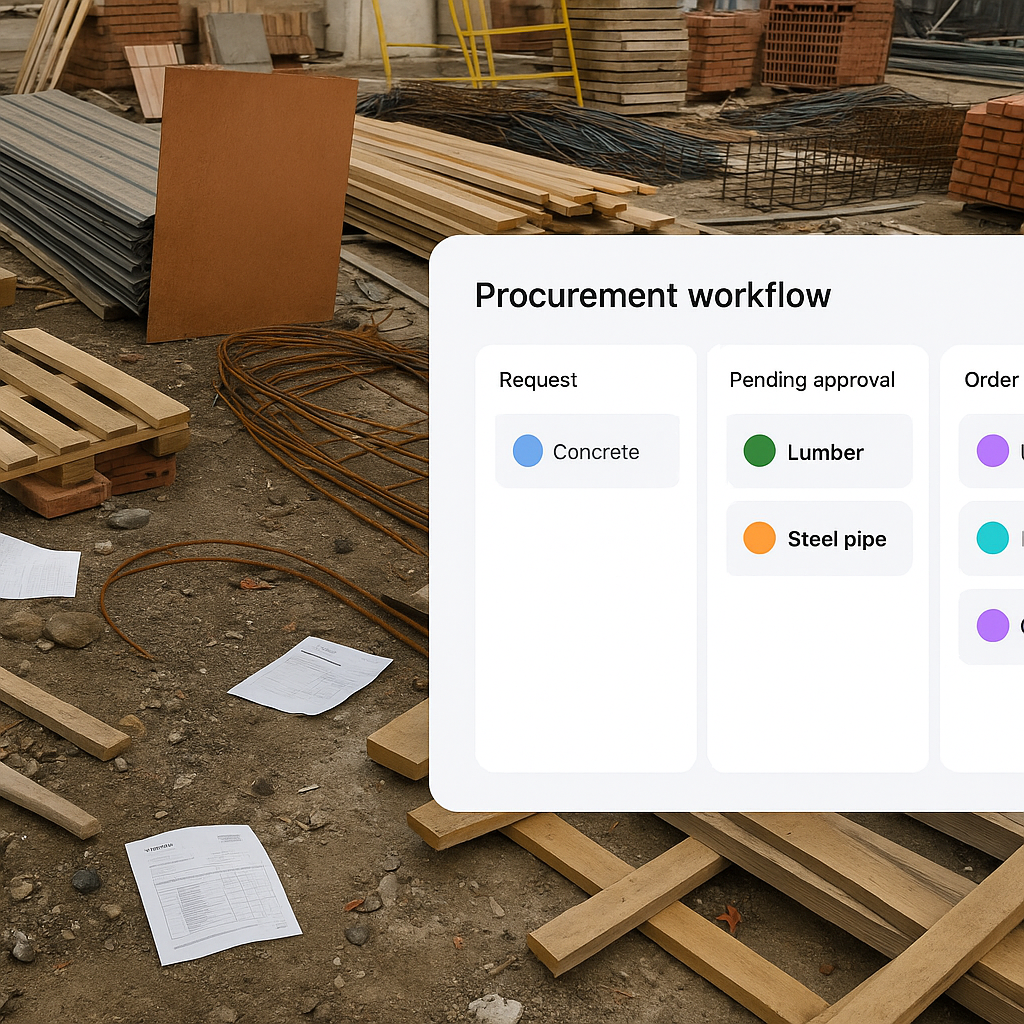
A structured MR → RFQ → Vendor Offers → PO workflow fixes this. JobNext makes it easy to standardize procurement, with approval chains baked into the process. Vendors submit quotes directly into the system, and managers approve POs with full visibility into costs and budgets.
This isn’t just theory. Contractors using JobNext’s procurement workflows have cut material costs by 10-15% simply by comparing vendor quotes more effectively.
Real-World Results
You might be thinking: how much difference can an ERP really make? The answer is a lot. According to JobNext's blog on margin erosion, contractors using ERP systems see up to 20% faster project execution and recover margins lost to poor cost tracking.
One contractor shared this story: Before ERP, they were losing ₹25 lakh annually to untracked subcontractor costs. After implementing JobNext, they flagged scope creep early and renegotiated ₹18 lakh in subcontractor bills. That’s real money saved.
The Bottom Line
If you’re running multiple projects without an ERP, you’re losing margins — period. Whether it’s cost tracking, revenue leakage, or procurement chaos, the problems won’t fix themselves. But the right ERP can. Platforms like JobNext don’t just replace your spreadsheets — they give you the systems you need to stop bleeding money.
Want to dig deeper into how ERP fixes margin erosion? Read: Why Contractors Who Skip Cloud ERP Are Losing Money.
Ready to see JobNext in action?
Multi-tenant SaaS ERP for construction, facilities management, and contracting — covering preconstruction, project execution, procurement, HR & payroll, equipment, finance, and 150+ analytics reports.
Get Started Free →Learn more at SoftNext Solutions