Construction Margins Are Under Attack
Let’s not sugarcoat it—construction margins are brutal. According to Deloitte's 2023 Engineering and Construction Outlook, the industry operates on margins as low as 2-7%. For contractors in India and the GCC, factor in rising material costs, labor shortages, and payment delays, and it’s clear—your margin isn’t just thin, it’s shrinking.
The most common culprit? Poor cost tracking. Projects start with promising estimates, but by the time you’re halfway through, overruns in material, labor, or subcontractor costs have eaten into your profits. And it’s not just about missing details—it’s about not knowing them in time to act.
The Real Problem: Visibility
We’ve spoken to contractors who only realize their profit margins are underwater after the project is done. That’s not a strategy—it’s a postmortem. Real-time analytics aren’t just nice to have anymore. They’re the difference between controlling costs and watching them spiral.
Here’s a quick example. Say you’re halfway through a commercial HVAC project. Your original BOQ (Bill of Quantities) estimated ducting materials at ₹15 lakhs. But due to supplier price hikes, actual costs are hitting ₹18.5 lakhs. Without real-time analytics, you’ll only notice during billing or reconciliation—when it’s too late to adjust.
What Real-Time Analytics Look Like
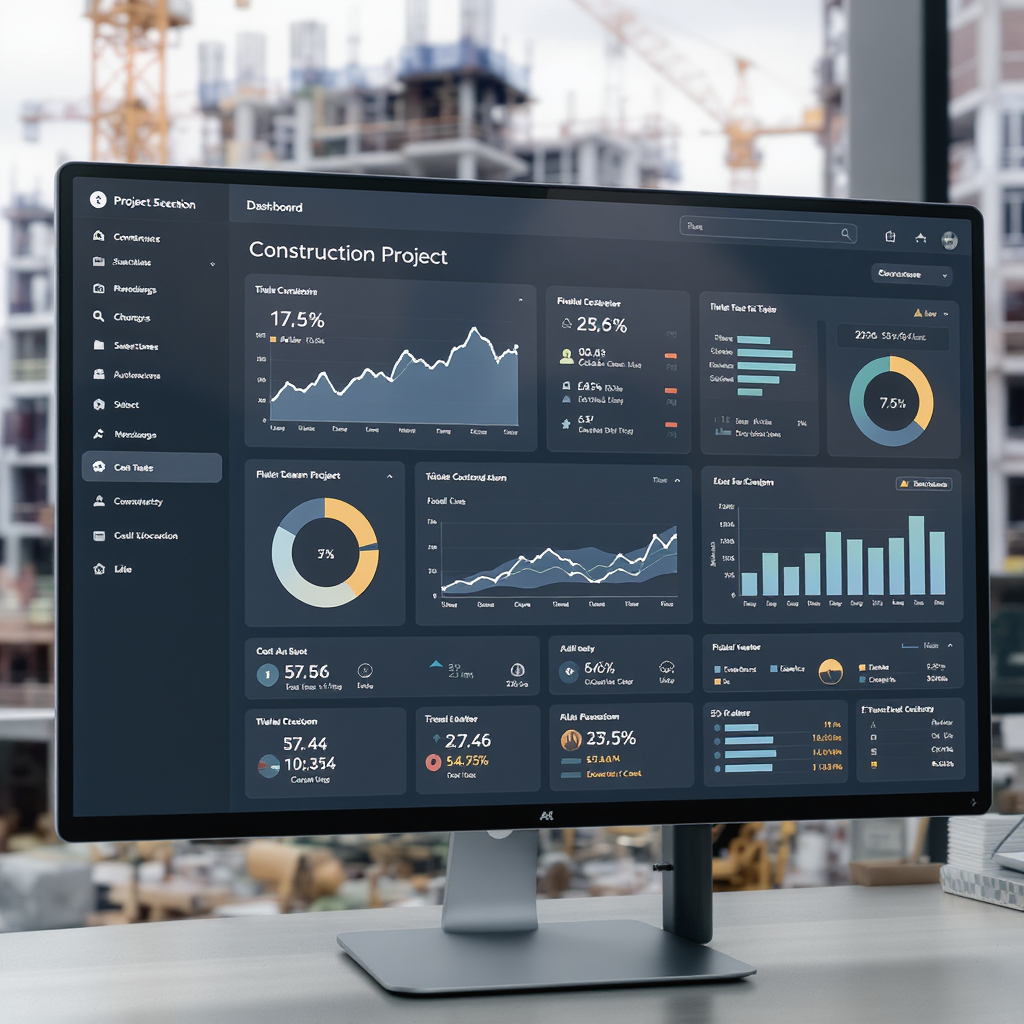
A proper construction ERP like JobNext solves this. Its project profitability monitoring gives you real-time visibility across BOQs, scopes, and estimates. Instead of waiting until the end of the month, you can track cost overages as they occur. You’ll know if your subcontractor's labor costs are climbing or if your material usage is higher than planned.
Imagine seeing a dashboard that flags, in red, that your ducting costs are 23% over budget. Now you can renegotiate with your supplier, adjust your procurement plan, or even reallocate resources to offset the overage. That’s analytics in action—preventing margin erosion before it happens.
Why This Matters More Now
Construction is getting more complex. Projects like NEOM in Saudi Arabia or India’s Smart Cities Mission require contractors to manage massive scopes and meet tight deadlines. Managing these without analytics? Good luck.
According to a McKinsey report, digital tools can boost construction productivity by up to 14-15%. But tools alone don’t cut it—it’s about how you use the data they provide. Real-time analytics let you:
- Spot cost overruns early.
- Optimize resource allocation.
- Identify underperforming subcontractors.
- Ensure billing matches progress.
Without these insights, you’re guessing instead of managing.
A Practical Example: Margin Tracking in Action
Let’s circle back to JobNext. A mid-size contractor we worked with in Oman was struggling with cost overruns on a multi-site building project. They had traditional systems—spreadsheets, siloed accounting software—but no unified view of profitability. By the time they realized they were over budget on materials, they were ₹10 lakhs in the red.
After implementing JobNext, they started using the project profitability module. Within the first month, they flagged a 12% labor cost overrun on one site. Turns out, overtime wasn’t being tracked properly. Fixing this saved them ₹4.5 lakhs over the next two months. That’s the power of real-time data.
For more on how unified platforms like JobNext eliminate tool fragmentation and improve profitability, check out The Hidden Cost of Tool Fragmentation: Why Contractors Need Unified Platforms.
Final Thought: Analytics Are Non-Negotiable
You might be thinking, "This sounds great, but is it worth the investment?" Short answer: yes. For contractors running multiple projects, the cost of poor visibility is far higher than the cost of implementing analytics tools.
A recent case study on Al Nab’a Services shows how a facilities management giant in Oman transformed their operations with JobNext, cutting payroll cycles from 21 days to 5 and gaining real-time control over costs. If they can manage 1,200+ sites with analytics, what’s stopping you?
The question isn’t whether analytics matter. It’s how long you can afford to operate without them.
Ready to see JobNext in action?
Multi-tenant SaaS ERP for construction, facilities management, and contracting — covering preconstruction, project execution, procurement, HR & payroll, equipment, finance, and 150+ analytics reports.
Get Started Free →Learn more at SoftNext Solutions