Why Procurement Delays Are Killing Your Projects
You're juggling multiple projects, each with tight timelines and razor-thin margins. Then procurement throws a wrench in the works — materials arrive late, approvals drag, and vendors miss deadlines. Sound familiar? You're not alone. For mid-size contractors, procurement inefficiencies are among the most common causes of project delays.
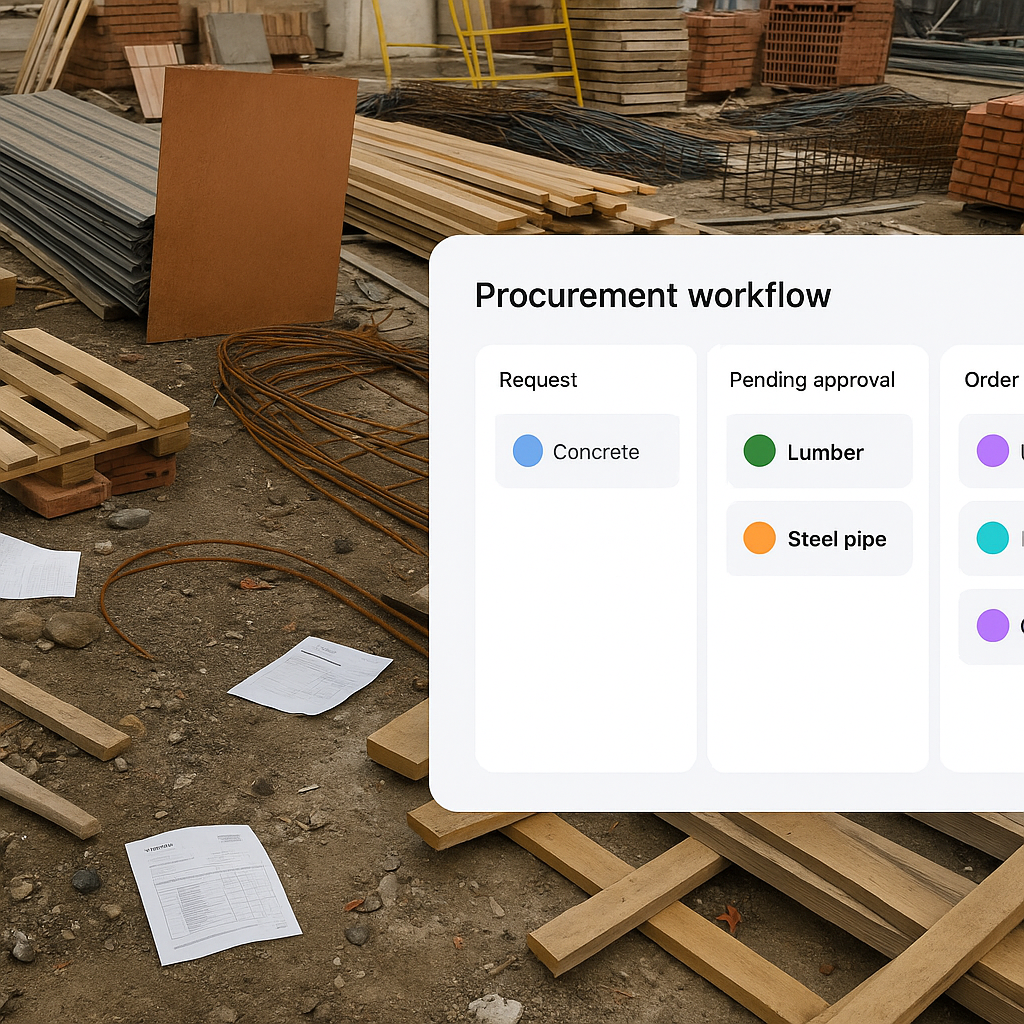
Let’s break it down. A typical procurement cycle involves material requisitions (MR), vendor RFQs, offer evaluations, purchase orders (PO), and delivery tracking. When this process is manual — spreadsheets, emails, phone calls — it’s a mess. Approvals get stuck in inboxes. Vendors send incomplete offers. Teams lose track of deadlines. The result? Delays cascade across your schedule, eating into margins and risking penalties.
How Automation Fixes This
Automated procurement tools simplify and standardize the workflow, reducing delays at every stage. Instead of chasing approvals through email threads, teams use structured workflows with built-in approval chains. Vendor RFQs become centralized, with automated reminders for responses. POs are generated directly from approved offers, cutting duplication and errors.
Take JobNext’s structured MR → RFQ → Vendor Offers → PO workflow as an example. Contractors using this system report up to 30% faster procurement cycles. Why? Because everything is tracked in one platform. Approvals move faster, vendors submit offers through a controlled process, and POs are issued without manual intervention.
Field-to-Office in Real Time discusses how real-time systems eliminate blind spots. Automated procurement works the same way — removing the guesswork and giving teams visibility into every step.
Real Data: What Contractors Are Seeing
Let’s look at numbers. A study by McKinsey found that construction projects lose 20% of potential productivity due to process inefficiencies. Automated procurement directly addresses this by:
- Reducing approval bottlenecks: JobNext’s workflows cut average approval times from 3 days to under 24 hours.
- Improving vendor response rates: Automated reminders increase RFQ response rates by up to 40%, shortening cycles.
- Lowering errors: With PO generation linked to approved offers, error rates drop by 25%.
Beyond Speed: Better Vendor Management
Faster procurement is great, but automation does more than save time. It improves vendor management, too. With systems like JobNext, contractors can maintain vendor histories — tracking reliability, pricing trends, and delivery performance. This data helps you make better decisions in future projects. No more guessing which vendor can deliver on time.
The Obvious Objection: What About Flexibility?
You might be thinking, “Automation sounds rigid. What if my project requires flexibility?” Fair point. But automation doesn’t mean losing control. Tools like JobNext allow custom workflows for exceptions — urgent MRs, non-standard RFQs, or negotiated POs. You get the speed and structure of automation without sacrificing adaptability.
Why It Matters Now
In 2023, material costs are unpredictable, and supply chains are under pressure. The Construction Supply Chain Resilience report highlights how disruptions have tested the industry. Automated procurement isn’t just a nice-to-have; it’s essential for keeping projects on track when external factors threaten your timeline.
Make the Switch
Manual procurement workflows are outdated. They waste time, create frustration, and hurt your bottom line. Automation isn’t just faster — it’s smarter. By adopting structured systems like JobNext’s MR-to-PO workflow, contractors can cut procurement delays, improve vendor management, and keep projects on schedule. Ready to stop guessing and start controlling?
Learn more about JobNext’s unified platform at jobnext.ai.
Ready to see JobNext in action?
Multi-tenant SaaS ERP for construction, facilities management, and contracting — covering preconstruction, project execution, procurement, HR & payroll, equipment, finance, and 150+ analytics reports.
Get Started Free →Learn more at SoftNext Solutions