Why Margins Are Shrinking in Construction
Margins in construction are thin—2-7% on average (Source: JobNext.ai Blog). When costs spiral out of control, profits vanish. What's worse? Most contractors don’t realize they’re losing money until it’s too late.
Here’s the problem: disconnected spreadsheets, manual processes, and outdated tools make it nearly impossible to track project profitability in real-time. By the time you find out that a BOQ (Bill of Quantities) is out of budget, you’re already in the red.
Let’s break down how a construction ERP (Enterprise Resource Planning) solves this—and why it’s a game-changer for contractors managing multiple projects.
1. Real-Time Cost Tracking Across BOQs
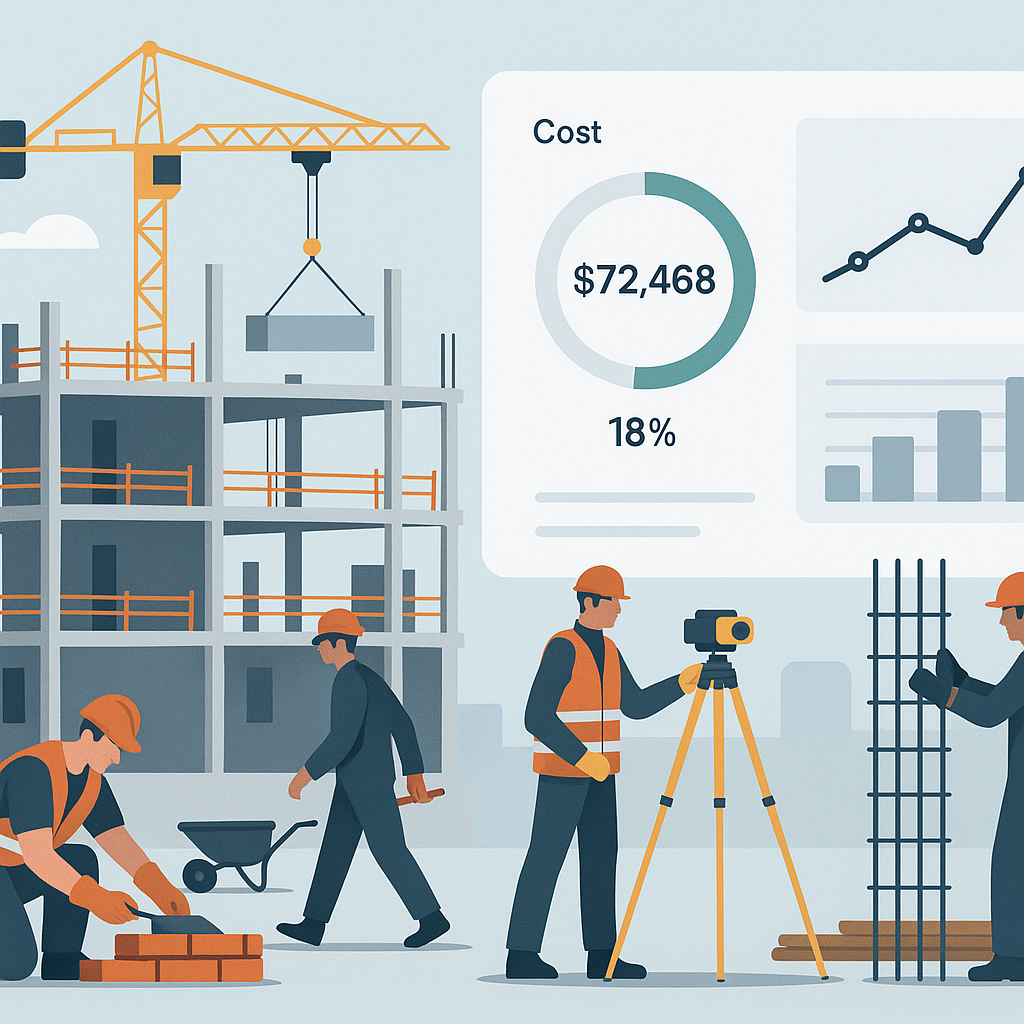
Imagine this: You’ve quoted a project expecting a gross margin of 12%. But halfway through, material prices spike, or subcontractor costs pile up. Without real-time data, you’re flying blind.
A good construction ERP tracks costs in real-time. For example, JobNext’s platform lets you monitor expenditures down to the BOQ, scope, or activity level. If your steel procurement is trending 15% over budget, you’ll know before it sinks the project.
Practical Example: A mid-size HVAC contractor we worked with used JobNext to track procurement costs daily. They identified a vendor consistently charging above agreed rates—something they’d never caught before. Switching vendors saved them ₹12 lakhs on a single project.
2. Unified Platform, No Tool Overload
If you’re juggling Excel for estimating, WhatsApp for approvals, and Tally for finance, you’re not alone. But this patchwork approach costs you more than frustration—it costs money.
Tool fragmentation creates data silos. Procurement teams don’t see what finance teams do, and project managers are left guessing. Construction ERPs unify these processes into one system.
With JobNext, for example, tendering, procurement, billing, and HR all happen on a single platform. The result? No more duplicate entries or missed approvals.
You might be thinking: “That sounds like overkill for my 50-person company.” But even small contractors benefit. A unified ERP eliminates the chaos of managing multiple tools and keeps everyone on the same page.
3. Structured Procurement Workflows That Save Time
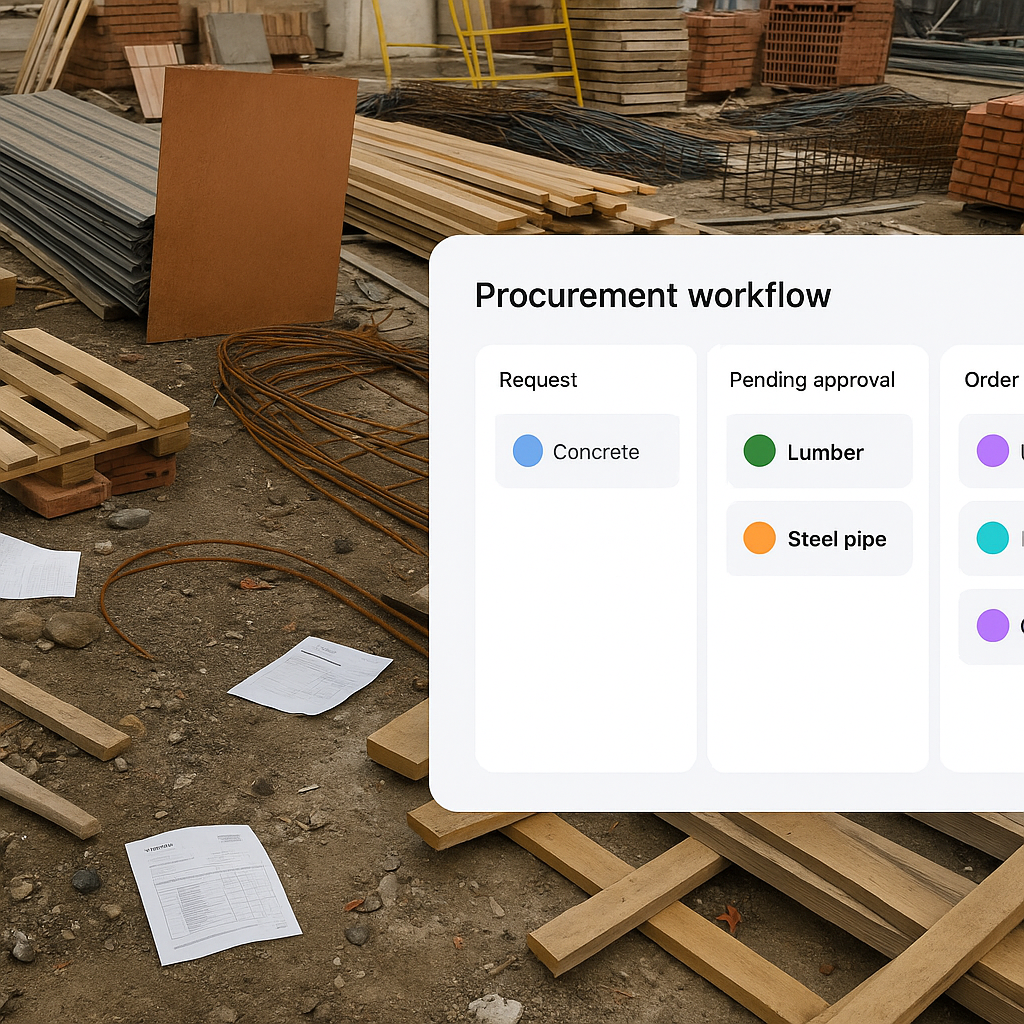
Manual procurement is a mess. Someone raises an MR (Material Request) on email, it gets lost, and suddenly, your site is short of cement for three days. Delays like this kill margins.
Construction ERPs introduce structured workflows. For instance, JobNext automates the entire MR → RFQ → Vendor Offers → PO (Purchase Order) chain. Approvals happen digitally, and nothing moves forward without sign-off.
This isn’t just about speed—it’s about control. You have a clear audit trail for every purchase, so you can prevent unauthorized spending.
4. Billing That Leaves Nothing on the Table
Revenue leakage is a silent killer. If you’re not billing accurately, you’re leaving money on the table—money you’ll never get back.
Most contractors rely on manual invoicing, which is prone to mistakes. A construction ERP automates billing based on actual progress. JobNext supports six billing methods (including RA Bills, stage-wise, and combined), ensuring every rupee is accounted for.
Practical Example: A general contractor in Dubai used JobNext to switch from manual RA Bills to automated progress-based billing. They recovered AED 2.5 million in underbilled work within six months.
5. Progress Tracking That Controls Subcontractor Costs
Subcontractors are a double-edged sword. They’re essential, but without clear progress tracking, costs can spiral.
JobNext’s measurement-based progress tracking ties payments directly to completed work. Subcontractors only get paid for what’s measured and approved, which eliminates disputes and overpayments.
Case in Point: A landscaping contractor in Oman cut subcontractor costs by 18% after implementing progress-based tracking. The ERP flagged discrepancies in reported vs. actual work, saving them thousands.
The Bottom Line
A construction ERP isn’t just software—it’s a profitability tool. By tracking costs in real-time, unifying processes, and automating billing, you can protect your margins and scale confidently.
Want to learn more? Check out our post on Why Contractors Using Cloud ERP See 20% Faster Project Execution for additional insights.
If margin erosion is keeping you up at night, it’s time to rethink your tools. Solutions like JobNext are built for contractors like you—those who need real-time control, not just reports after the fact.
Ready to see JobNext in action?
Multi-tenant SaaS ERP for construction, facilities management, and contracting — covering preconstruction, project execution, procurement, HR & payroll, equipment, finance, and 150+ analytics reports.
Get Started Free →Learn more at SoftNext Solutions