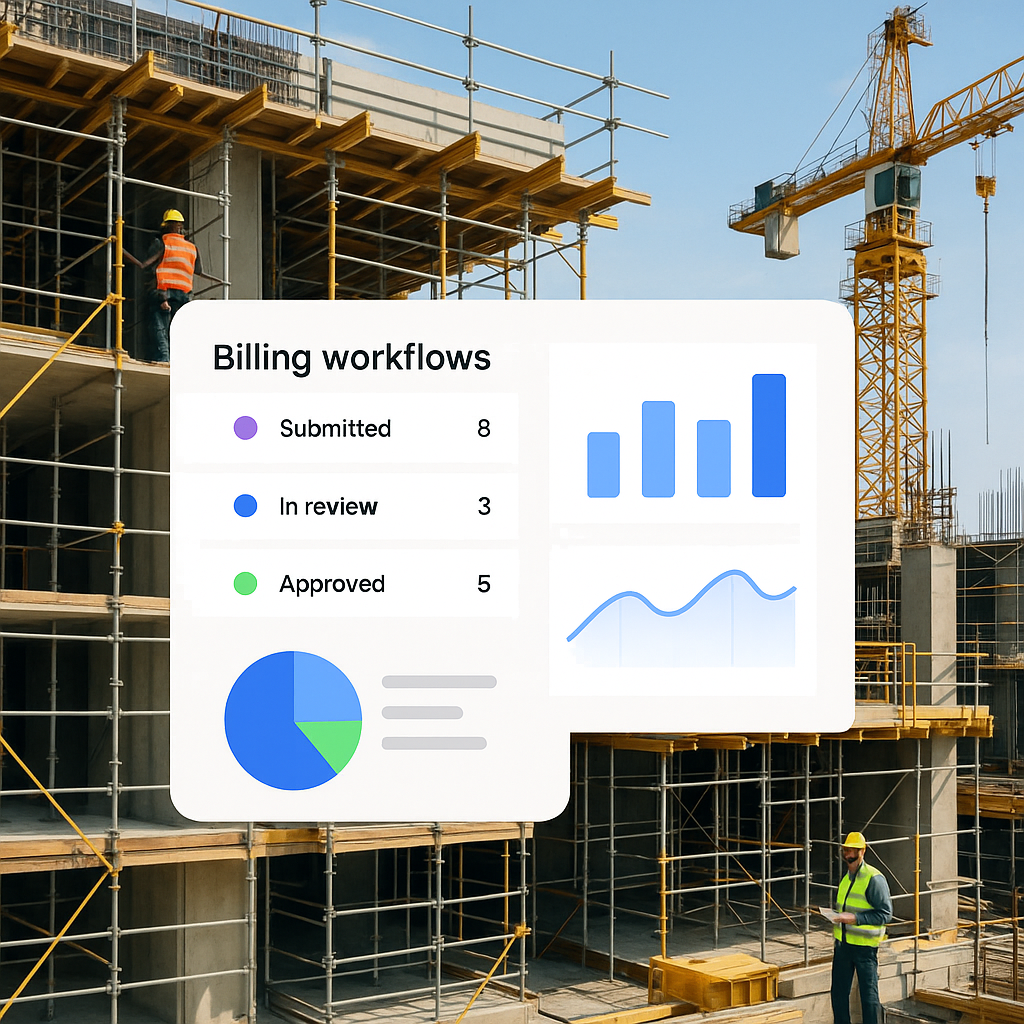
Why Revenue Leakage is a Silent Killer in Construction
Margins in construction are already razor-thin. A 2023 study by Xpedeon found that the average contractor operates on a net margin of just 6-8%. With stakes this high, even small billing errors can snowball into major profit losses. Miss an RA bill? Forget to invoice a scope variation? Welcome to the world of revenue leakage.
We’ve seen this play out with contractors managing 10+ projects at once. The more sites you run, the harder it gets to track every billing method: RA bills, stage-wise invoices, monthly bills, supply BOQ contracts, combined billing, and one-time payments. If you’re managing this with spreadsheets or disconnected tools, you're asking for trouble. And no, Tally isn’t enough.
The ERP Fix: Automation and Visibility
This is where a construction ERP like JobNext comes into play. It’s not magic—it’s just structured workflows. Here’s a practical example:
1. Covering All Billing Methods
Let’s say you’re running an MEP (mechanical, electrical, plumbing) project. The SOW includes supply BOQ items, progress-based RA bills, and a one-time commissioning fee. Without an ERP, you might miss invoicing the commissioning fee entirely. Why? Because it’s outside the regular RA cycle. JobNext ensures every billing method is accounted for based on predefined triggers—so nothing slips through.
2. Real-Time Progress Tracking
Revenue leakage often happens because field teams and billing teams don’t talk. If site engineers delay progress updates, the billing department can’t raise timely invoices. With JobNext, site engineers update progress measurements directly into the system (via mobile, if needed). This feeds into your billing cycle automatically. No more waiting for email updates or chasing WhatsApp messages.
3. Automated Alerts for Pending Invoices
One of our clients, a mid-sized interior contracting firm, used to lose 2-3% of revenue annually due to missed invoices. JobNext solved this with automated reminders. Any pending RA bill or milestone triggers an alert to the billing team. Simple, but effective.
Why Tally Alone Won’t Cut It
You might be thinking, "We already use Tally for invoicing and GST compliance." Sure, Tally is great for accounting, but it wasn’t built for construction. It doesn’t handle multi-stage billing or integrate with site progress data. That’s like trying to run a marathon in flip-flops—it’ll work for a while, but it’s not built for the job.
Case in Point: Subcontractor Management
Subcontractor billing is another area where revenue leakage hides. Many contractors rely on manual measurement sheets, which leads to disputes and delays. JobNext simplifies this with a structured workflow:
- Measurement Entry: Subcontractors submit measurements digitally.
- Approval Workflow: Site engineers verify and approve.
- Billing Integration: Approved measurements auto-generate subcontractor invoices.
This not only speeds up payments but also ensures accuracy. No more arguments over "missing measurements."
The Bigger Picture: Compliance and Audits
Beyond billing, revenue leakage can also rear its head during audits. GST mismatches, missed TDS deductions, or untracked bank guarantees can cost you dearly. JobNext integrates tax compliance (GST, TDS, PF, etc.) into every transaction. One less thing to worry about.
For a deeper dive into how cloud ERPs tackle margin erosion, check out Why Contractors Need Cloud ERP to Stop Profit Leaks.
Wrapping Up
If you’re serious about stopping revenue leakage, you need to move beyond spreadsheets and disconnected tools. A good construction ERP doesn’t just track costs—it ensures every rupee is accounted for, from tender to final invoice. For companies running 10+ projects, this isn’t optional. It’s survival.
Want to see what this looks like in action? Learn more about JobNext's billing automation.
Ready to see JobNext in action?
Multi-tenant SaaS ERP for construction, facilities management, and contracting — covering preconstruction, project execution, procurement, HR & payroll, equipment, finance, and 150+ analytics reports.
Get Started Free →Learn more at SoftNext Solutions